Why is Prague so famous?
Prague is famous for the largest ancient castle complex in the world, the 14th-century Charles Bridge, an intact medieval core, and the Vltava the whole city is built around.
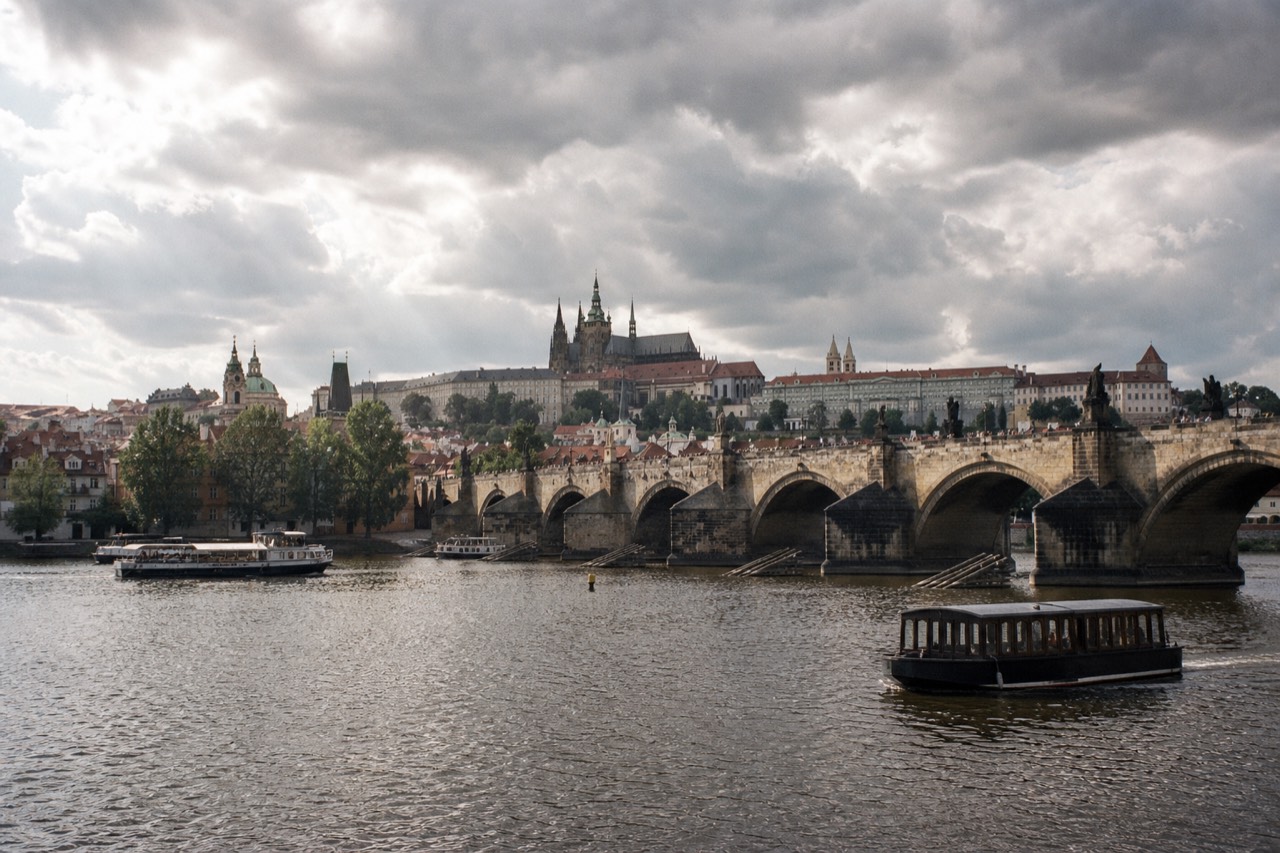
Most great European cities lost their old centres twice over, to war and then to the wrecking ball of postwar planning. Prague did not. The medieval street plan, the Baroque facades, the bridge from 1357 and the castle above them all came through the last century largely intact, which is the quiet, unglamorous reason the city is famous. It is not that any single sight outdoes its rivals. It is that all of them survived together, along one river, and you can still walk the whole thing.
Why is Prague so famous?
Prague is famous for four things that sit within a kilometre of each other: Prague Castle, recognised as the largest ancient castle complex in the world, the 14th-century Charles Bridge, an intact medieval historic centre protected as a UNESCO World Heritage site, and the Vltava, the river the whole city is built around. Together they form a skyline that survived the 20th century almost whole.
The city's reputation is less about superlatives than about completeness, a point the Historic Centre of Prague listing makes plain: the world-heritage status covers the intact urban fabric, not a single monument. The broader story of how the city grew into that fame is set out in the overview of Prague. The four pillars below are what most people actually mean when they call it one of Europe's most beautiful cities.
| Famous for | The fact behind it |
|---|---|
| Prague Castle | Largest ancient castle complex in the world, per Guinness World Records |
| Charles Bridge | Begun 9 July 1357, thirty Baroque statues |
| The historic centre | Intact medieval core, UNESCO World Heritage site |
| The Vltava | The 431 km river the whole city is built around |
What makes Prague Castle so special?
Prague Castle holds the Guinness World Records title for the largest ancient castle complex in the world, measuring roughly 570 by 128 metres across 7.28 hectares and founded in the 9th century. It is a walled town rather than a single building, and St Vitus Cathedral inside it, begun in 1344 and finished only in 1929, gives the skyline its defining spire.
The scale is the thing photographs never quite carry. The official Guinness World Records entry records the dimensions, but the feeling only lands when you realise the cathedral, the old royal palace, a basilica and a lane of tiny houses all sit inside one continuous set of walls. St Vitus took nearly six centuries to complete, which is its own kind of story, and from the river below the whole complex resolves into a single long ridge with that one spire breaking it. That is the frame most people carry home as "Prague."
Why is Charles Bridge so famous?
Charles Bridge is famous as the stone spine of the old city: Charles IV laid its foundation stone on 9 July 1357, and for centuries it was the only crossing between the Old Town and the castle. Its thirty mostly Baroque statues, added from 1683 onward, turned a river crossing into an open-air gallery that now reads sharply after dark under a 2024 lighting upgrade.
The bridge is famous partly for its age and partly for its survival: it carried the coronation route of Bohemian kings and still stands, closed to cars, walked by thousands a day. The recent lighting project fitted each of the thirty statues with its own fixtures, so the after-dark crossing has a clarity it lacked a few years ago. For the single best angle on it, the one from directly underneath, you have to leave the deck and get on the water, which is where the river itself enters the story.
What role does the Vltava play in Prague's fame?
The Vltava is the reason the famous parts sit where they do. The 431 km river gave the city its bridges, its trade and its shape, and it runs directly past the castle, Charles Bridge and the National Theatre. Bedřich Smetana wrote his beloved symphonic poem Vltava about it in 1874, and 2025 marked 150 years since its premiere. Seeing the skyline from the water is the view the streets cannot give.
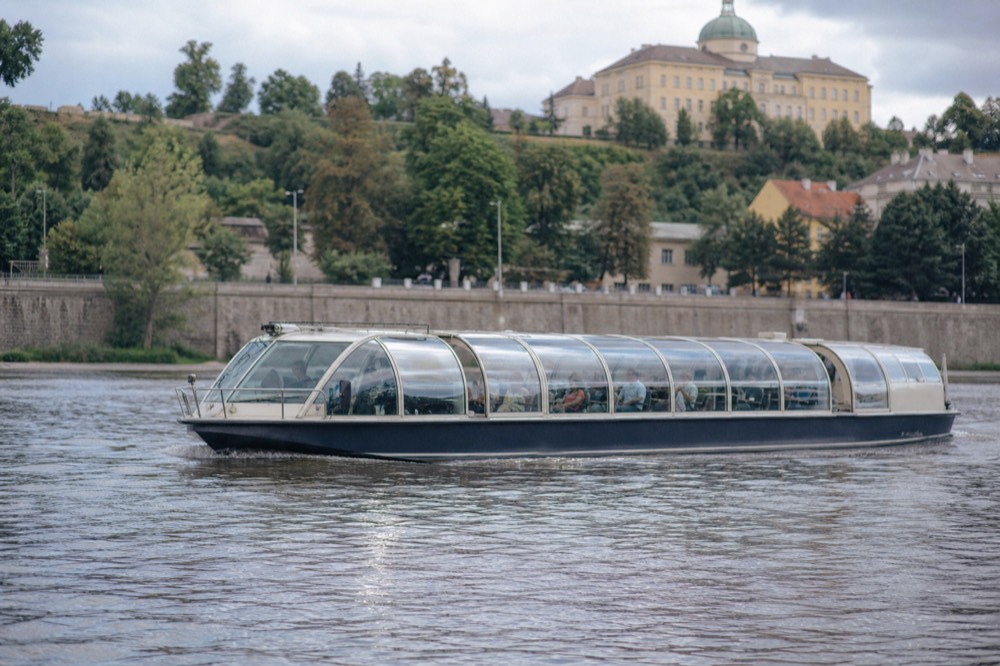
The river is so bound up with the city's identity that it has two names and a national anthem's worth of music. Vltava is the Czech name; Moldau is the older German one, first written as Moltaua in 1253, and the two stories are unpicked in what Vltava means in English and why the river is called the Moldau. Smetana's Vltava, composed between 20 November and 8 December 1874, traces the river from its springs to Prague, and its premiere on 4 April 1875 is why 2025 became the Year of the Vltava River. The single best way to feel why the river matters is to get on it: the most-booked evening loop, a 4.2 across more than 41,000 reviews, gathers the whole lit skyline into 50 minutes, and you can check tonight's departure times and the current price in a moment. The fuller river story sits in the Vltava cruise guide and what makes the Vltava so special.
The river also hides a quieter famous corner: the Čertovka, the narrow "Devil's Channel" beside Kampa Island under Charles Bridge, a millstream so tight the big boats cannot enter it. A small-boat canal cruise threads it and gets closer to the bridge's underside than any full-size vessel, the kind of angle that made Prague a painter's city long before it was a photographer's one.
How do you actually see the famous parts?
In two days, on foot and once from the water. Walk the castle, the bridge and the Old Town Square by day, then see the same skyline from the Vltava after dark, when the floodlights turn four separate landmarks into one frame. The famous parts of Prague are close enough that the river is the only thing that shows them all at once.
The city's fame is walkable, which is rare. You can stand under the castle, cross the bridge and reach the Old Town Square in well under an hour, and the one view that pulls it all together comes from the middle of the river. For the short list of what to prioritise, what you should not miss in Prague keeps it tight, and you can line up all eleven Vltava sailings on the homepage to pick the hour that fits. Prague is famous because it survived whole, and the river is still the best seat in the house.